
Jarod Wallace · Owner, Alpine Roofing Specialists
27+ years roofing Utah · 10,000+ roofs installed · Licensed & insured (UT contractor #369642-5501)
Homeowners ask me about shingle brands, color choices, and warranty length almost every estimate. They almost never ask about ventilation — and that is the single biggest reason roofs in Utah fail 5 to 10 years before they should. After 27 years and more than 10,000 roofs across the Wasatch Front, I can tell you the roofs that go the distance all have one thing in common: a properly balanced ventilation system.
What ventilation is actually doing up there
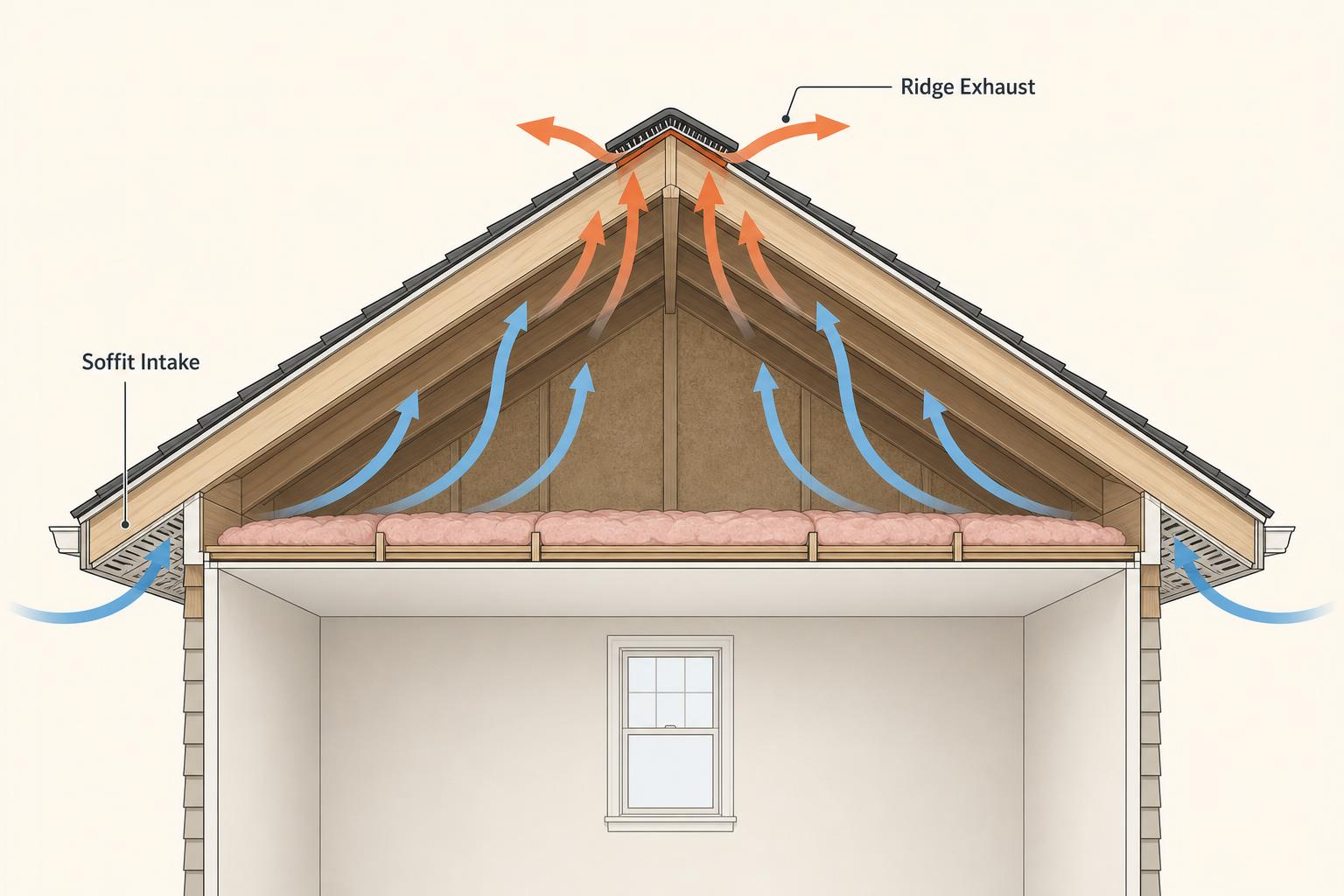
A roof system is not just the shingles on top. It is a layered assembly — deck, underlayment, shingles — sitting over an attic that needs to breathe. Proper ventilation pulls cool air in through the soffits (the underside of the eaves) and pushes hot, moist air out through ridge or roof vents at the top. That continuous airflow does two critical jobs: it keeps the attic close to outdoor temperature in summer, and it pulls humidity out in winter. Take either of those away and the roof above starts to fail from underneath, where you can't see it until it's too late.
Summer: shingles cook from the back side
A south-facing Utah roof in July can hit 160°F on the shingle surface. With balanced ventilation, the attic underneath stays within 10–20 degrees of outdoor temperature. With poor ventilation, that attic climbs past 140°F and bakes the asphalt out of the shingles from below. We see the result on roofs all the time — curling, brittleness, premature granule loss — and the homeowner blames "cheap shingles" when the real culprit was a sealed-up attic. Manufacturers know this too: most major shingle warranties are voided by inadequate ventilation, and they will deny claims when it's documented.
Winter: the quiet damage you never see
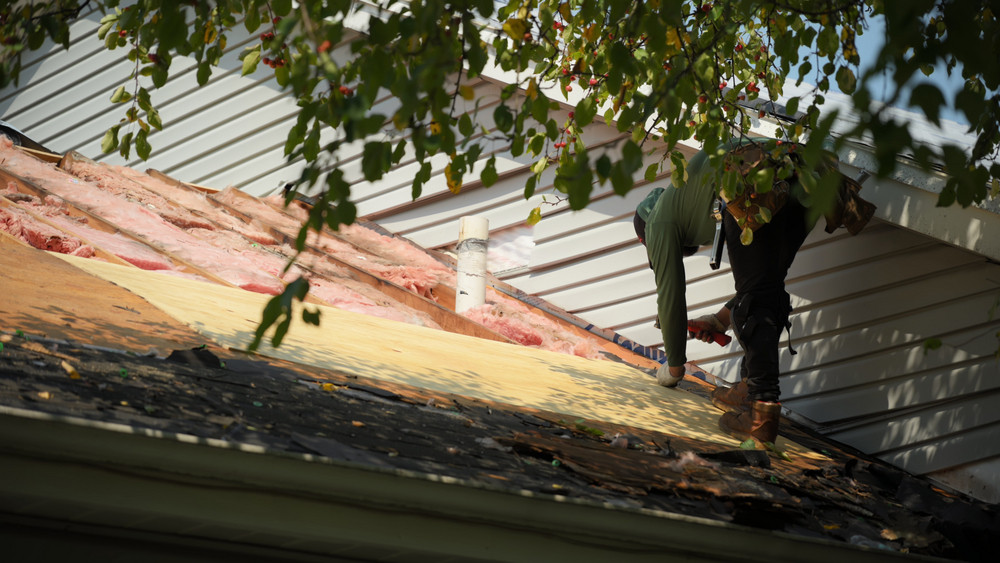
Winter is actually worse. A family of four generates 2–4 gallons of water vapor a day from cooking, showers, and breathing. That moisture rises into the attic. With proper ventilation, it exits before it can condense. With poor ventilation, it hits the cold underside of the roof deck and turns to frost — then melts when the attic warms up, soaking the insulation and the OSB. Over 3–5 winters that cycle delaminates the deck, rusts the nails, and grows mold. We've torn off roofs in Lindon and Pleasant Grove where the shingles looked fine from the street but the deck underneath was black and spongy.
Ice dams are a ventilation problem, not a shingle problem
When the attic is too warm, snow on the upper roof melts, runs down to the cold eaves, and refreezes — backing water up under the shingles. Every ice dam I've inspected in foothill neighborhoods around Lindon and Pleasant Grove traces back to one of two issues: missing soffit intake, or attic insulation packed so tightly against the roof deck that there is no airflow channel. Fixing the ventilation fixes the ice dam. Adding more ice-and-water shield only buys time.
What a balanced system looks like
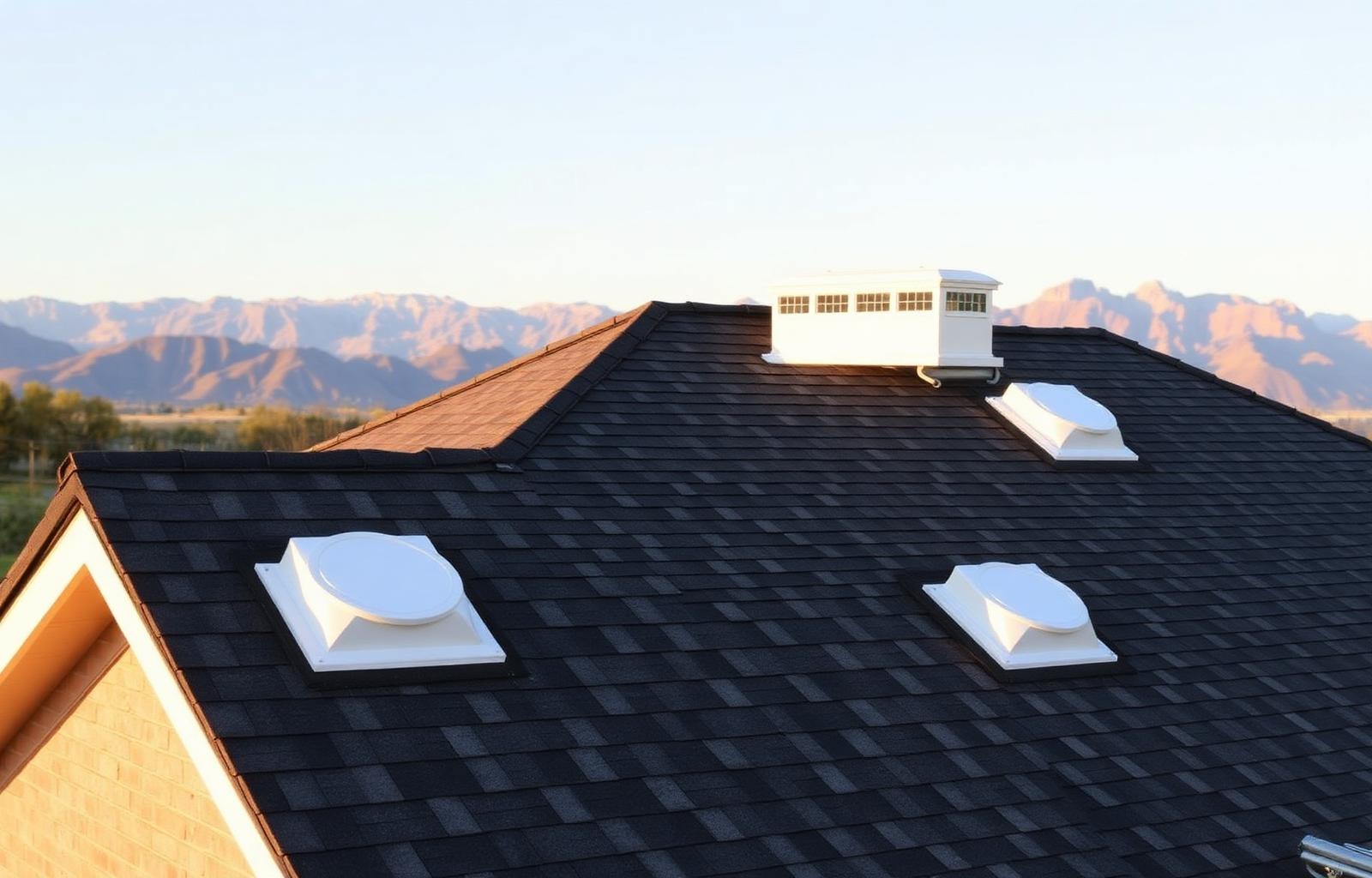
The rule is simple: equal intake and exhaust, sized to the attic. Code requires 1 square foot of net free vent area for every 150 square feet of attic floor, split roughly 50/50 between intake (soffit) and exhaust (ridge or roof vents). What we see in the field, especially on homes built before 2005, is heavy on exhaust and starved on intake — sometimes no soffit vents at all because they were painted over or stuffed with insulation. An exhaust-heavy system actually pulls conditioned air out of your house through ceiling gaps, which is the opposite of what you want.
What we check on every inspection
Our Alpine 7-Point Roof Assessment always includes a ventilation audit: net free area calculation, intake vs. exhaust balance, soffit blockage, baffle presence, and deck moisture readings in the attic. About 1 in 3 Utah homes we look at has a ventilation problem the homeowner had no idea existed. Most of the fixes are inexpensive — adding soffit vents, installing baffles, or correcting an exhaust mismatch — and they add years to the next roof.
What this means for you
If you're considering a new roof, make ventilation part of the conversation before you pick a shingle color. If you already have a roof and you've noticed warm rooms upstairs, ice dams every winter, or musty smells in closets that share a wall with the attic, those are ventilation symptoms. Schedule a free assessment and we'll tell you exactly what your attic is doing.
Ready to get a straight answer on your roof?
Call directly or book a free, no-pressure inspection. We'll give you honest options — repair, replace, or wait.