
Jarod Wallace · Owner, Alpine Roofing Specialists
27+ years roofing Utah · 10,000+ roofs installed · Licensed & insured (UT contractor #369642-5501)
Utah's hail season runs roughly May through September, with the heaviest activity in late June and early July along the Wasatch Front. After 27 years of inspecting Utah roofs the morning after a storm — and sitting in on hundreds of insurance adjustments — here is the full playbook: how to prep, what to do during and after the storm, and how the insurance claim actually works once a roofer is involved.
Before the season (do this in April)
- Photograph all four roof faces from the ground at a fixed time of day. These dated baseline photos make insurance claims dramatically easier later.
- Clean gutters and check downspout splash blocks. Hail blocks the system fast.
- Trim branches within 6 feet of the roof. Wind-driven branches do more damage than the hail itself.
- Locate your insurance policy, deductible amount, and claim phone number. Save them in your phone.
- Know whether your policy is RCV (Replacement Cost Value — pays to fully replace) or ACV (Actual Cash Value — pays depreciated value only). The difference can be tens of thousands of dollars on a roof claim. More on that below.
During a storm
Stay inside, away from windows, and listen for impact size — pea, dime, quarter, golf ball. Anything dime-sized or larger sustained for more than a minute is enough to bruise asphalt shingles. Note the time and duration; insurance adjusters ask for it later.
The next morning
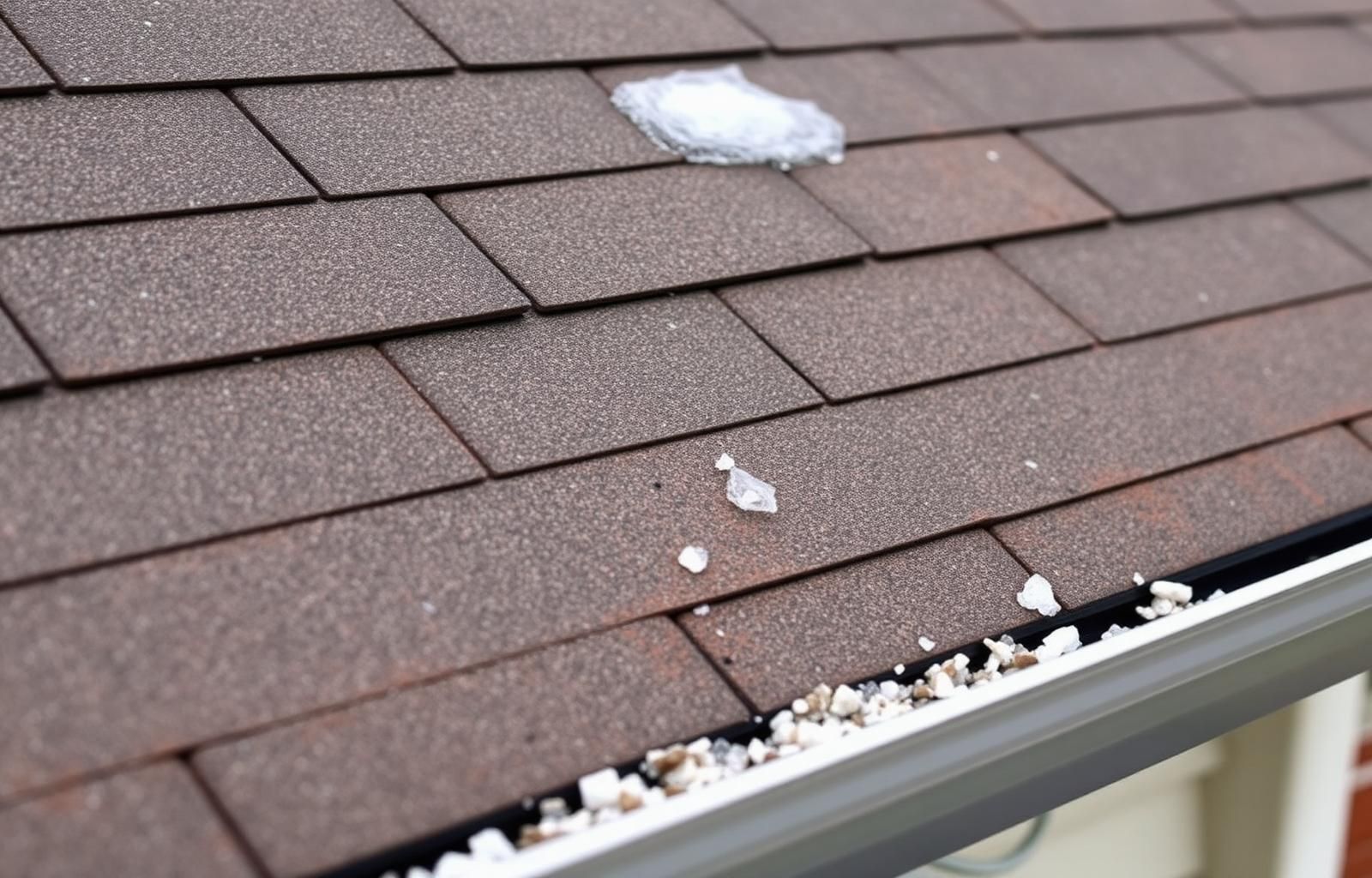
- Walk the yard, not the roof. Look for shingle granules in flower beds and downspout splash zones — that is the single most reliable ground-level indicator of hail damage.
- Check soft metals: gutters, downspouts, AC fins, mailbox, vent caps. Dents on these surfaces almost always mean the shingles took hits too.
- Photograph everything before any contact with insurance.
Skip the door-knockers
Skip the storm-chaser who shows up that afternoon offering a "free inspection." Out-of-state crews cause the majority of insurance-fraud problems we see in Utah. Use a local contractor who will still be here in 5 years to honor a workmanship warranty — and who has a Utah business license, a physical address, and documented bonding and insurance you can verify with the state.
ACV vs. RCV — the most expensive line in your policy
RCV (Replacement Cost Value) policies pay what it actually costs to replace the roof today, usually in two checks: an initial check for the depreciated value, and a second "depreciation recovery" check once the work is complete and invoiced. Most Utah homeowner policies are RCV.
ACV (Actual Cash Value) policies pay only the depreciated value of the roof — so a 16-year roof on a 20-year schedule might only pay out 20% of replacement cost. The rest is on you. Some carriers quietly convert older roofs from RCV to ACV at renewal; check your declarations page every year.
How the claim actually flows
- Inspection first, then call insurance. A documented damage report from a licensed contractor strengthens the claim and prevents an adjuster from waving off legitimate damage.
- File the claim. The insurer assigns a field adjuster who comes out within 1–3 weeks.
- Adjuster meeting. Your contractor should be on the roof at the same time. This is where most underscoping happens — without a roofer present, items get missed.
- Initial scope & ACV check. The adjuster writes a scope and the carrier issues a check for the depreciated amount, minus your deductible.
- Supplements. When the roof comes off, things show up — rotted decking, code-required upgrades, additional flashing. The contractor submits supplements with photos; reasonable supplements are paid.
- Depreciation recovery (RCV only). After the work is invoiced, the carrier issues the second check for the recoverable depreciation. You only get this if you actually do the work.
What an underscoped estimate looks like
First-pass adjuster reports commonly miss: drip edge replacement (now code in most of Utah), ice and water shield in valleys and around penetrations, ridge cap shingles (priced separately from field shingles), starter strip, step flashing, and ventilation components. If your insurance scope is one page long for a full tear-off, it's almost certainly missing items. A good contractor reviews the scope line-by-line and supplements before work begins, not after.
About your deductible (and contractors who offer to 'waive' it)
Your deductible is your responsibility — Utah law makes it insurance fraud for a contractor to absorb it or rebate it back to you. Any roofer who offers to "eat the deductible" or "make it free" is telling you, up front, that they're willing to commit fraud on your behalf. That same roofer will cut corners on your roof. Walk away.
When to call us
If you found granules, dented soft metals, or interior staining, schedule an inspection before contacting your insurance company. We'll document the damage, give you a written report, and meet the adjuster on the roof when they come out — at no cost to you, and with no obligation. Common Utah hail corridors we cover include Lehi, American Fork, Pleasant Grove, Orem, Provo, and Springville.
Ready to get a straight answer on your roof?
Call directly or book a free, no-pressure inspection. We'll give you honest options — repair, replace, or wait.